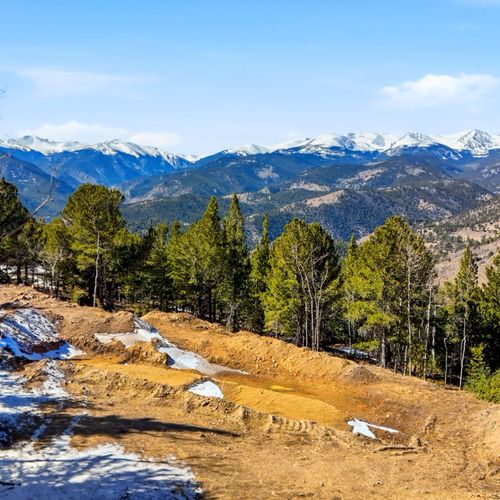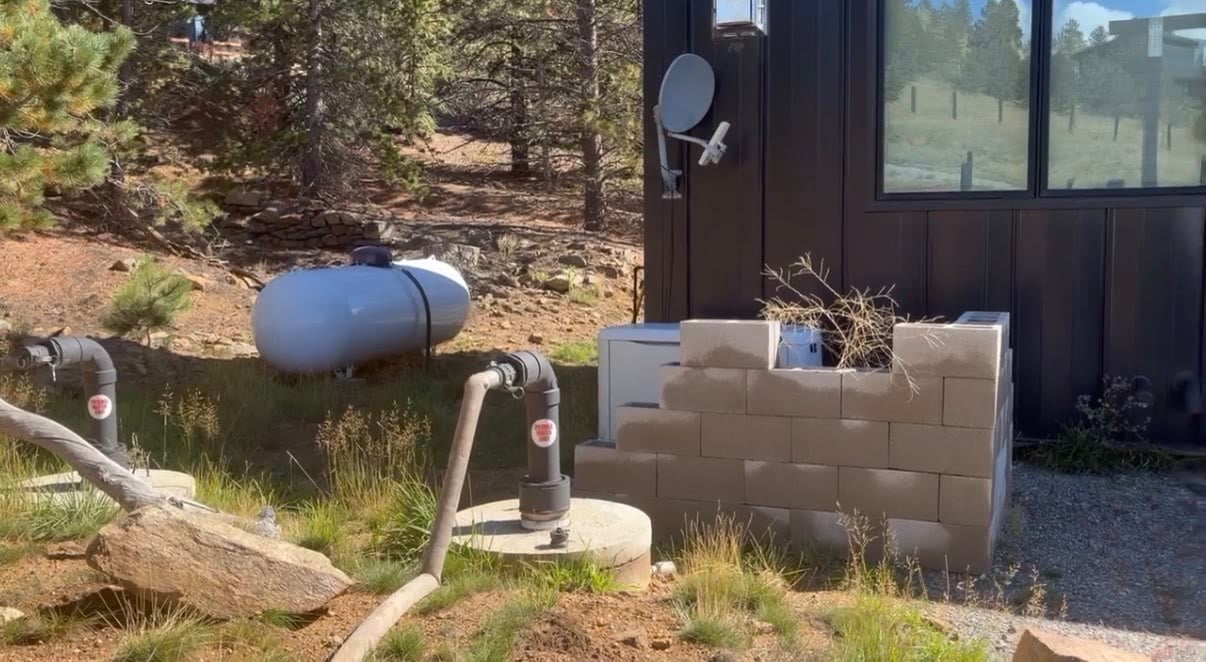
The first time a client watches the water truck come up from Arvada to fill a cistern, you can see it on their face. Wait. Water gets delivered?
Yep. And it’s fine. Once you understand how a cistern works, it stops being scary and becomes just another system you know how to manage, like propane. Here’s what I walk every buyer through before they write an offer on a cistern or hauled-water property in Gilpin or Clear Creek County.
When you’ll run into a cistern up here
You’ll see cisterns in three situations:
- No well. The lot has no well permit, or no well yet, so the cistern is the whole water supply.
- A weak well. A storage tank buffers a low-producing well so the house has water when you need it.
- New builds. The fire district requires a separate firefighting cistern.
Those are very different tanks, and mixing them up is one of the most common mistakes I see.
If the property has a well, that’s its own checklist: the permit, the flow test, the water quality and the inspection. I cover all of it in Buying a Mountain Home With a Well: The 5 Checks I Run Before My Buyers Close. This post is about the tank and the truck.
Drinking water cistern vs. fire cistern
A domestic cistern holds the water you drink, cook with and shower in. A fire cistern is a firefighting supply. It is not house water.
Nederland Fire’s standard, for example, calls for a 7,000-gallon cistern for most homes from 1,601 to 3,600 square feet (3,500 gallons may work up to 1,600 square feet, depending on location), and says it should be a separate and independent water supply from your domestic water, sprinklers and well. Sprinklers don’t replace it. In some cases, a contribution to their Community Cistern Fund ($10,000, $15,000 or $20,000 depending on home size) is an alternative.
Every fire district sets its own rules. If you’re buying land or planning a build, we call the district that covers that parcel before you budget: Timberline Fire in much of Gilpin, Nederland Fire around Nederland, and whichever district covers the specific address in Clear Creek.
How big should the cistern be?
I couldn’t find a published sizing standard for Gilpin or Clear Creek, so on any property where it matters, we call the county building department and environmental health and ask.
For a reference point, Douglas County’s standard sizes drinking water storage at 80 gallons per person per day. The first bedroom counts as two people and each extra bedroom counts as one, so a 3-bedroom home is four people. That works out to a 3-day supply (960 gallons) when the well makes at least half a gallon per minute, and a 5-day supply (1,600 gallons) below that. The same standard calls for an approved potable tank, burial at least a foot below the frost line, a 22-inch manway, screened vents, and setbacks of 50 feet from a septic tank and 100 feet from a leach field.
For a home that runs on hauled water only, bigger is better. A tank that holds two truckloads means fewer deliveries and fewer winter emergencies.
What hauled water actually costs
Pricing depends on the hauler and the distance, so treat this as an example, not a quote. One hauler posts 11 cents a gallon for auto-fill on tanks of 1,500 gallons or more. At that rate, filling a 1,500-gallon tank is about $165. Some mountain haulers don’t post prices at all, and some run 4×4 trucks that carry up to 1,000 gallons a load.
The real number for any listing is the seller’s delivery receipts. Twelve months of them tells you what living there actually costs, winter included.
Potable means the hauler, not just the tank
Under Colorado’s drinking water rules, a water hauler is treated as a public water system. It has to operate under a state-approved plan and check the disinfectant level of the water every delivery day.
A buddy with a farm tank is not a potable hauler.
Rainwater won’t fill your cistern
This one surprises people. Colorado allows two rain barrels totaling 110 gallons, for outdoor use only. Rooftop collection permits exist, but only for exempt-well owners and only within their well permit’s uses.
A cistern-only lot can’t legally run on rain. If gutters are plumbed into the tank, that’s a red flag, not a feature.
Freezing: where cisterns actually fail
Colorado’s cistern standards say a buried tank has to be deep enough to prevent freezing, but they don’t give a number. I couldn’t find a published frost depth for Gilpin or Clear Creek, so we ask the building department. In our rocky ground, getting a tank deep enough sometimes means blasting.
If the tank itself was buried right, the trouble is usually somewhere else:
- The fill line and fill port. If the pipe from the fill cap runs shallow or doesn’t drain, the water sitting in it freezes and the truck can’t fill.
- The supply line to the house, especially where it comes up through a crawl space or enters the house.
- Indoor tanks in unheated spaces. And they’re heavy. Water is about 8.3 pounds a gallon, so a 1,500-gallon tank is well over 12,000 pounds.
- Low water. A nearly empty tank freezes more easily. The buyers who stretch deliveries are the ones who run dry or freeze up.
- Vacant second homes. If the heat gets turned down or the power goes out while nobody’s there, the pump, pressure tank and lines are at risk.
Winter access is a water problem, not just a driveway problem
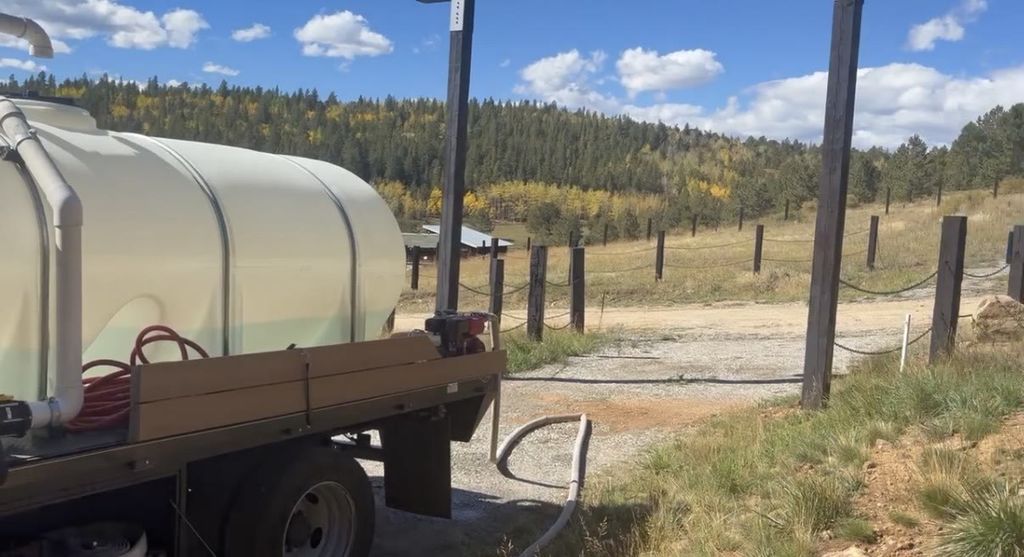
If the truck can’t reach the fill port in February, you don’t have water. It’s that simple.
Even haulers with 4×4 trucks built for mountain roads ask for your address and a photo of the driveway before the first delivery, and want to know about gate codes, steep grades and low branches. Boulder County’s cistern guide calls for a safe spot for the truck within 15 feet of the tank, and says not to drive over the tank. If the fill port sits 200 feet down a shaded, icy driveway, you could be stuck.
Every hauler sets its own limits, so we ask before closing, not after the first snow.
What a cistern inspection should cover
A lot of general home inspectors check the pump and pressure tank but never look inside the cistern. We ask up front, and bring in a pump or water systems contractor if we need to. Here’s what I want covered:
- Size and material confirmed.
- Lid and riser secure and above grade.
- Vents screened and turned down.
- No gutters or surface drainage running in.
- A look inside for sediment, cracks, roots or critters.
- The fill line route.
- The pump, pressure tank and any treatment equipment.
- A bacteria test from the tap (total coliform and E. coli).
Cleaning a cistern means someone climbing into a confined space, which is dangerous. That’s a job for a water systems pro, not a weekend project.
Cistern red flags I watch for
- “Cistern” in the listing with no size, material or age.
- A fire cistern marketed as house water, or the reverse.
- No delivery receipts, or a seller who fills it with a tank in the back of a pickup.
- Gutters plumbed into the cistern.
- A cistern near the septic tank or leach field, or no visible manway, vent or exterior fill port.
- A fill port at the bottom of a steep or north-facing driveway, or far from where a truck can park.
- A lid or riser at or below grade, or water pooling around it.
- Heat tape and foam wrap all over the fill or supply lines. That’s often a sign it’s frozen before.
- An indoor tank in an unheated garage or crawl space.
- A vacant second home with no low-temperature alarm or remote monitoring.
- A seller who can’t say when the tank was last cleaned or tested.
Questions to ask
The seller: What’s the tank size, material, age and location? Who delivers, how often, and can I see 12 months of receipts? Has the cistern or its lines ever frozen? Ever run out of water? When was it last cleaned, inspected or tested, and who installed it?
The hauler: Can you reach this fill port year-round? How long is your hose? What’s your truck size and minimum delivery? Any surcharge for steep or long driveways? Are you operating under a state-approved plan?
The county: Is a cistern acceptable as the water supply for a building permit here, and is there a minimum size? What’s the design frost depth, and was this cistern permitted? Gilpin Community Development: 303-582-5831. Gilpin Environmental Health: 720-617-7779.
The fire district: Is a separate fire cistern required, what size, and is there a fund-in-lieu option?
The inspector: Will you open the cistern and look inside, or do I need a separate water systems contractor?
A cistern done right is boring (in the best way)
The tank sits deep enough that it won’t freeze. The truck backs right up to the fill port. You keep it topped off and stop thinking about it.
My job is to make sure the one you’re buying was built that way before you own it. So we look inside, test the water, and ask the delivery company if they can reach it in January. This is part of the process, and it’s a lot less scary when someone’s done it before.
And water in means water out. Almost every cistern home is also on septic, so read my post on buying land or a home with septic in Gilpin and Clear Creek County too.
For the bigger picture, start with the wells and water section of my Mountain Buyer’s Guide and my mountain home buyer’s checklist. Looking at a specific area? Check out Central City, Black Hawk, Idaho Springs or Nederland.
Circling a mountain home, and the water is what’s holding you back? Let’s talk it through. You’ll know exactly what you’re buying before you commit.
This is general information, not legal advice. Rules, standards and delivery prices change, so confirm current requirements with the county, your fire district and your hauler before you buy.
Thinking about a move to the mountains?
Get my free Colorado Mountain Home Buyer’s Guide, or grab 20 minutes on my calendar and we’ll talk through the property you have in mind.
Sources: Nederland Fire 2023 Cistern Update · Douglas County IS-22-98 Potable Water Storage · 5 CCR 1002-11 Section 11.41 Water Haulers · 2 CCR 402-2 Rule 11 · CSU Extension Rainwater Collection · Boulder County Emergency Water Supply Guide · CDC Cistern Safety · Example hauler pricing · Gilpin County Building Division · Gilpin County Septic and Well Information