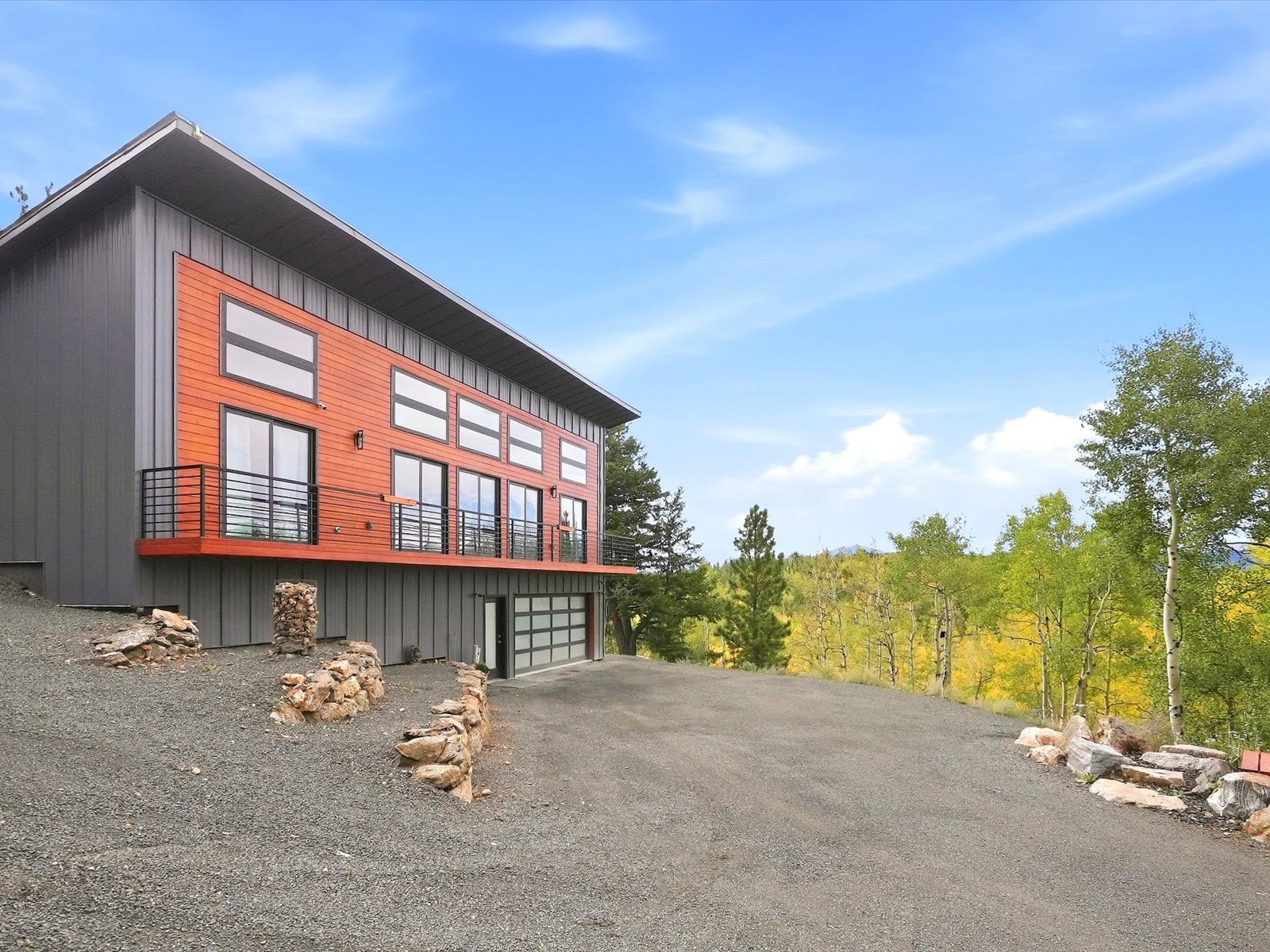
The listing says “turnkey Airbnb.” The seller’s rental numbers look great. You run them on a Sunday night after the drive back down the hill, and suddenly this place pays for itself.
Slow down before you write that offer.
Gilpin County just rewrote its short-term rental rules, the commercial licenses are full, and there’s a waitlist. Clear Creek has its own cap. So the income you’re counting on may not come with the keys.
Here’s what I check, what it means, and how I’d underwrite a mountain rental if you’re shopping this winter.
First question: which side of the line are you on?
The county rules below only cover unincorporated land. Central City and Black Hawk run their own rules. So do Idaho Springs, Georgetown, Silver Plume and Empire.
A short-term rental in Gilpin means renting all or part of a dwelling for less than 30 consecutive days. You need a county license before you advertise, not after.
Gilpin County: two tiers, and one of them is full
Ordinance 26-01 was adopted September 22, 2026, and replaced the old rules. It splits rentals into two tiers.
- Tier 1 (you live there): The home is your primary residence and you’re on the property while it’s rented, or you live in another dwelling on the same property. There’s no cap. But it only covers a portion of the property, so advertising the whole house is a violation.
- Tier 2 (commercial): Everything else. That’s most second homes. It’s capped at the lesser of 5% of county housing units or 155 licenses, and the cap has been met. As of October 19, 21 applicants were on the waitlist, and the county says it can’t estimate the wait.
A spot on the waitlist isn’t a license. You can’t advertise or rent on it.
The part that catches buyers
Gilpin licenses are non-transferable, except to a spouse, next of kin or beneficiary after a death. And the name on the license has to match the owner of record.
The ordinance doesn’t spell out what happens on a sale. Put those two rules together, though, and you should assume an existing Tier 2 license ends with the seller, and you go to the back of the line. We’d confirm that with the county on your specific deal.
That’s why I get a little twitchy when I see “income producing” on a listing the owner doesn’t live in. The seller’s rental history is the seller’s. It may tell you very little about what you can do after closing.
What a Gilpin rental has to have
Even with a license available, the property has to qualify.
- A Certificate of Occupancy. Campers, yurts and cabins with no CO are out. Guests can’t sleep in an RV parked on site.
- Legal water. A current well permit, an approved cistern declaration or a state spring water right. The county won’t license a rental that conflicts with your well permit conditions.
- Septic that matches. Your inspection has to be by a county-licensed inspector, within 180 days of applying. Occupancy is capped by what the septic was designed for. Three-bedroom septic, three-bedroom rental, no matter how many bunk beds you squeeze in.
- Parking on site. At least one space per rented bedroom, none in the road right-of-way. On a shared driveway, you’ll need proof of legal access.
- Safety basics. Fire extinguishers, smoke and CO detectors, deck guardrails, two ways out of every advertised bedroom, bear-proof trash and a reflective address sign at the driveway.
- No open code violations.
Yes, the fire pit matters
Wood, pellet, charcoal or any fire that throws embers is banned at a Gilpin rental. All the time. Not just during restrictions.
Gas or liquid-fueled features are allowed with an on/off switch, but not during Stage 1 or 2 restrictions, Red Flag Warnings or burn bans. That cozy fire pit in the listing photos might need to become a propane table.
Running it from Denver, or from Nebraska
Tier 2 needs a responsible agent available whenever guests are there, who responds within 30 minutes. If you’re out of state, plan on a local manager, and your neighbors get told in writing who that is.
Licenses last 24 months. Fees are $500 for Tier 1 and $1,200 for Tier 2. Fines run $250, $750, then $1,000, and each day counts separately. Two or more violations in a license term can start revocation proceedings. And no events.
Clear Creek County works differently
Clear Creek licenses fall under Ordinance 19. There are three main types:
- Standard (non-primary): Capped at 4.5% of residences in the unincorporated county, which is 163 for 2026. If none are available, the county talks to you about a waitlist.
- Seasonal: You live in the home at least nine months a year and rent the whole thing, up to 120 days in a license year.
- Occupied: You live there full time and rent a portion.
Yurts, RVs and tents can’t be rentals here either. There’s also a draft Ordinance 21 out, so this could move. Don’t assume today’s rules will be next year’s rules, and ask directly whether the seller’s license goes anywhere after closing.
The guest cabin trap
This one’s sneaky. You might figure you’ll live in the main house and rent the guest cabin.
State water rules allow a well permitted for one home to serve a guest space only if nobody outside the family is renting or living there, among other tests. Rent it out and it’s generally treated as a second dwelling, so your well permit has to allow two. On under 35 acres, that typically takes a decreed augmentation plan. That means a water attorney and an engineer, not a form.
Clear Creek’s own rental page doesn’t line up on this. One part offers a license for a permitted ADU, and another says ADUs can’t be rented. If this is your plan, we get Planning’s answer in writing before you’re committed.
Red flags I watch for
- “Turnkey Airbnb” or “great rental potential” on a home the owner doesn’t live in.
- Rental income quoted with no license number or expiration date.
- More advertised bedrooms than the septic was designed for.
- Guests staying in a yurt, camper or cabin with no CO.
- A wood fire pit starring in the rental photos.
- One parking spot for a 4-bedroom rental, or a shared driveway with no access agreement.
- A full kitchen in a guest house on a one-home well.
Questions to ask
The seller: Do you hold a license? Which type? What’s the number and expiration? Any complaints or violations? Can we see the rental history and the last septic inspection?
County Planning (Gilpin 303-582-5214, Clear Creek 303-679-2436): Is this parcel unincorporated? Any open violations? Where’s the waitlist now? How does licensing work for a new owner after closing?
The septic inspector: What occupancy was this system designed for?
Your lender: Will you count projected rental income? Most won’t without a license history, so ask early.
How I handle this with my buyers
I run the numbers without the rental income first.
If the home works for you with no Airbnb money, and you love it, you’re on solid ground. If you’ll live there and rent part of it, that path can be open. Any commercial license down the road is a bonus, not the plan.
If the deal only works with the license, that’s worth knowing before you’re under contract, not after.
You can still have the mountain place. Christmas up here, the kids on the deck, all of it. This is part of the process. We’re just making it an educated leap.
For the bigger picture, start with my Mountain Buyer’s Guide, including the buying process, wells and water and septic sections. Looking at a specific area? Check out Gilpin County, Idaho Springs or St. Mary’s.
Thinking about a mountain home that could also earn some rent? Book a call with me and we’ll look at what’s actually possible on that property before you make an offer.
This is general information, not legal advice. Short-term rental rules are changing quickly, so confirm current requirements with the county or town before you buy.
Thinking about a move to the mountains?
Get my free Colorado Mountain Home Buyer’s Guide, or grab 20 minutes on my calendar and we’ll talk through the property you have in mind.
Sources: Gilpin County Short Term Rentals · Gilpin Ordinance 26-01 · Clear Creek County Short-Term Rentals · Clear Creek Zoning, Section 2 · DWR Guideline 2016-1