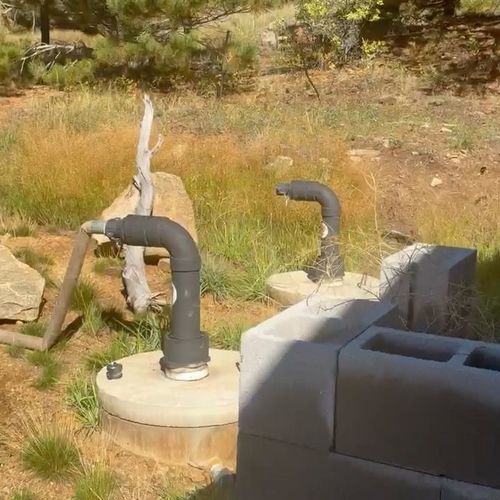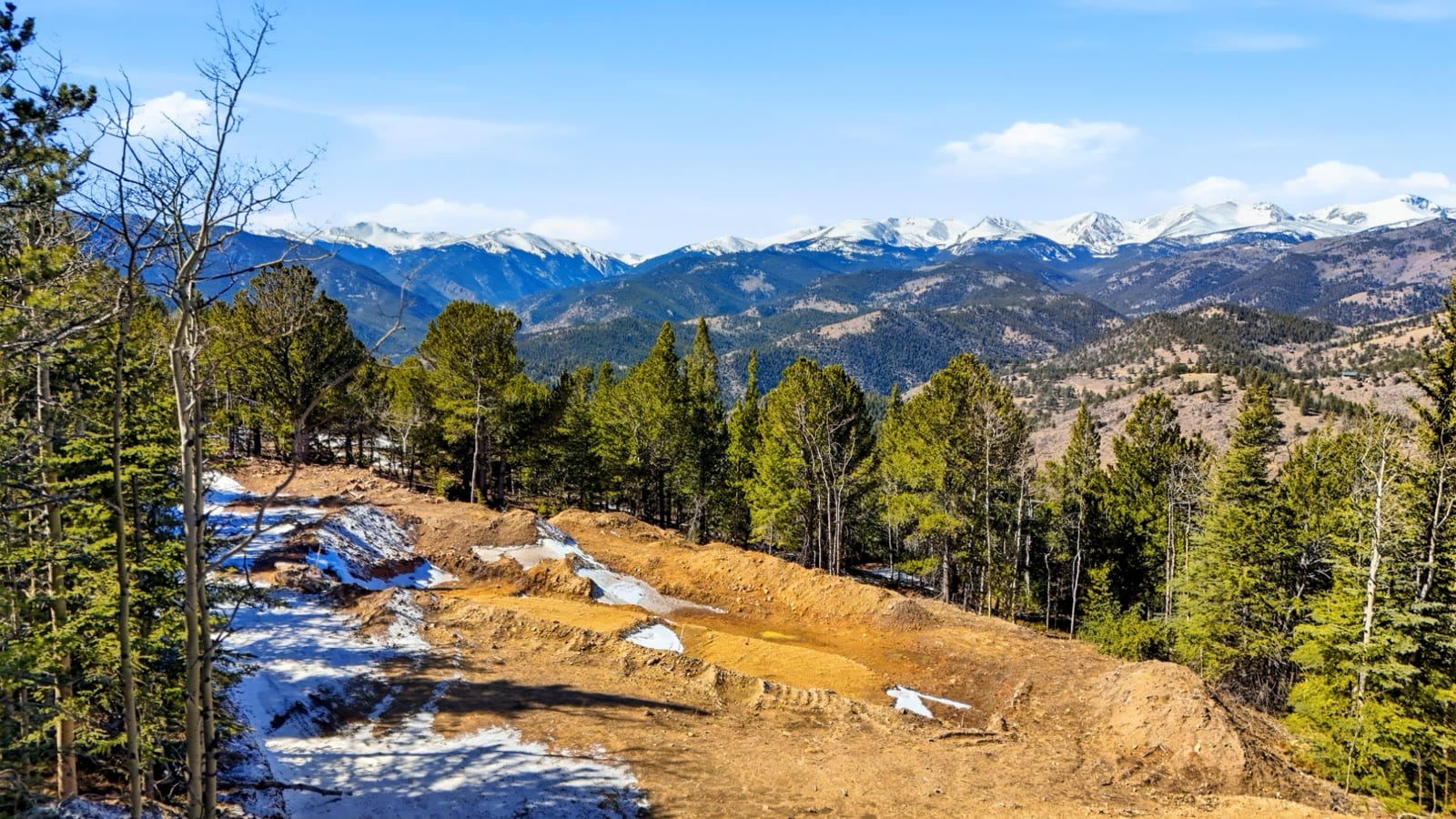
That lot above Central City with the view you can’t stop thinking about? The view doesn’t decide where your house goes. The dirt does.
On raw land in Gilpin and Clear Creek County, the septic permit decides whether a house can go there at all and how much it’s going to cost. On a resale, the county septic paperwork can hold up your closing. And Colorado’s septic rules were just updated, so a lot of what you read online is already out of date.
Here’s what I check, what it means, and why timing matters a lot more once we get into November.
Who’s actually in charge of septic up here
Colorado’s septic rule is called Regulation 43. It covers onsite wastewater treatment systems (you’ll see “OWTS” on every county form), and that includes every house you’d ever buy up here. The state writes the rule, but you deal with the county.
- Gilpin County (Black Hawk, Central City and the unincorporated areas around them): septic is handled by Gilpin County Public Health. Gilpin’s new rules took effect March 13, 2026.
- Clear Creek County (Idaho Springs, Georgetown, St. Mary’s, Empire, Dumont and the rest): Clear Creek Environmental Health runs septic countywide, including inside the towns.
The state adopted a new Reg 43 in 2025 and the counties updated their rules after that. Systems permitted before 2026 aren’t automatically illegal. But anything new, expanded or repaired now follows the new rules.
Buying raw land: the soil comes first
You’ll hear people say a lot is “perc approved.” That phrase is mostly a leftover now.
Under the current rules, the main tool is a soil profile evaluation. Someone digs pits and reads the soil by eye and by hand: texture, structure, how much rock, how deep to bedrock, and signs that the ground gets saturated part of the year. A perc test is optional. If a perc test and the pits disagree, the more restrictive answer wins.
The test pit rules are pretty specific:
- At least two pits, and more if the technician thinks it’s needed.
- At least one pit goes in the part of the septic area expected to be the worst.
- They’re dug next to the proposed field, down to a limiting layer, groundwater, or four feet below where the field would sit, whichever comes first.
- The soil has to be read in good light, and it has to be unfrozen.
In Clear Creek, the pits stay open and secured until the county comes out to look at them.
Why mountain lots are “hard” (and why that’s okay)
Sandy soil is the easy case. A sandy lot needs about one-eighth the septic field area of the toughest soil type. Clay needs a bigger field.
Up here, a lot of what we find is rock. When soil is more than 35% rock or fractured bedrock, the state calls it a “Type R” soil, and it changes the system:
- It has to be designed by an engineer.
- It needs pressure distribution (a pump pushing effluent out evenly instead of letting gravity do it).
- In most cases it needs a sand filter, typically two to three feet of sand.
Rocky soil is very common up here, and it’s very buildable. It just means an engineered system, so we want that answer and a rough price before you’re locked in.
A few other things also push a lot into engineered-system territory: groundwater, bedrock or a restrictive layer within four feet of the bottom of the field, or a slope over 30%. In Clear Creek, a grade over 30% within 35 feet of the field means a liner and an upslope berm.
I don’t quote septic costs off the top of my head, and you shouldn’t trust anyone who does. Get two engineer or installer quotes for the actual lot.
How a new system gets permitted
In Clear Creek, the steps look like this:
- Soils evaluation with at least two test pits, inspected by the county.
- A design stamped by a Colorado-licensed Professional Engineer. Every design needs one.
- Submit and pay. Review typically takes two to three weeks, longer with revisions or snow.
- A county-licensed installer.
- A driveway permit issued (or already finaled) before the septic permit will issue.
- Three inspections: open hole, components, final grading.
Gilpin also does three inspections. Under the 2026 rules, Gilpin added a few things worth knowing: a separate electrical permit for pumps, alarms and control panels, effluent filters on new or replacement tanks, and design changes only by the engineer of record. Permits expire one year after issuance if work hasn’t started.
The county permit fees themselves are modest compared to the real cost. In Gilpin, a new construction permit is $1,490 for 2026. In Clear Creek, a major construction permit is $1,023. Engineering, excavation and installation are where the real money goes.
Buying a home with septic: the Use Permit
If you’re buying a house rather than land, the big one is the Use Permit. Both counties require one before title transfers on a home with septic.
In unincorporated Gilpin, the seller gets the inspection and the Use Permit before closing. It’s valid for six months, takes about 10 business days to process, and penalties can add up daily if it’s missed. There are exceptions, including systems permitted and installed five years or less before the sale, and vacant land.
Some higher-treatment systems (the county calls them TL2 and up) also need a maintenance contract and an operating permit, so that’s an ongoing cost to plan for.
The good news for you as a buyer: the seller has to get the system inspected and permitted before we close. You’re not buying a mystery.
Why fall timing matters
Soil has to be unfrozen to be read. County review runs longer with snow. So if you’re looking at land this fall or winter, your due diligence window has to be long enough for pits, a county visit and an engineer. A winter raw-land closing with no soil evaluation done yet is a risk I’d rather talk you out of than walk you into.
Septic red flags I watch for
- “Perc approved” or “septic approved” with no soil report or engineer’s design.
- No permit or records on file for an existing system.
- Unpermitted repairs, especially swapped-out components.
- A permit over a year old with no work started.
- Bedrock or boulders right where the only flat building area is.
- The only possible field location is on a slope over 30%.
- Seeps, springs, willows or wet meadows near where the field would go.
- Old soil data from a different spot than where the house is planned.
- A small lot where the septic field, well setbacks and driveway are all fighting for the same flat ground.
- A pump or alarm panel with no electrical permit.
- A seller who doesn’t know about the Use Permit, close to closing.
Questions to ask
The seller: Do you have the original permit, design and final inspection? Were any repairs permitted? Have test pits ever been dug, and where?
The county: Is there an active or expired permit on this parcel? Any soil data or old applications on file? Gilpin County septic program: 720-617-7779. Clear Creek Environmental Health: 303-679-2428.
The engineer: What soil type is it, and is it Type R? Conventional, sand filter or higher treatment? Where does the field fit, and does it move the house?
Your lender: Do you require the Use Permit or a separate septic inspection before funding?
How I handle septic for my buyers
On land, we confirm the soil works and get an engineer involved before you commit to a house plan, and I make sure the inspection deadline actually gives us time to do that. On a home, I track the Use Permit from the start so it isn’t a surprise the week of closing.
There’s a learning curve with septic. This is part of the process. You don’t have to know all of this yourself, you just need someone who does.
For the full picture, start with my Mountain Buyer’s Guide and the septic section. If you’re eyeing a specific area, check out Gilpin County, Idaho Springs or St. Mary’s.
Looking at mountain land or a home on septic this fall? Book a call with me and we’ll map out what that lot needs before you’re locked in.
This is general information, not legal advice. Septic rules and fees change, so confirm current requirements with the county before you buy.
Thinking about a move to the mountains?
Get my free Colorado Mountain Home Buyer’s Guide, or grab 20 minutes on my calendar and we’ll talk through the property you have in mind.
Sources: Gilpin County new OWTS regulations · Gilpin County Septic and Well Information · Gilpin 2026 Fee Schedule · Clear Creek County OWTS · Reg 43.5 Site and Soil Evaluation · Reg 43.10 Design Criteria · CDPHE OWTS