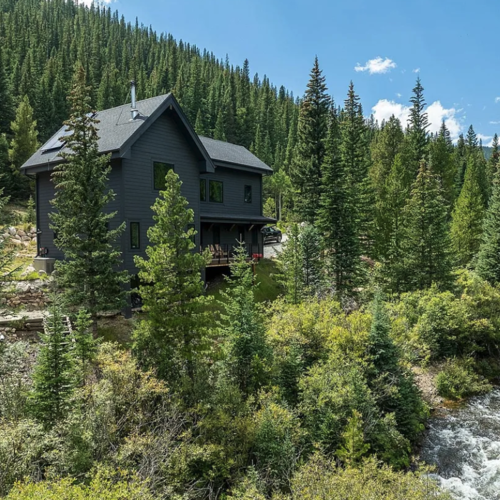




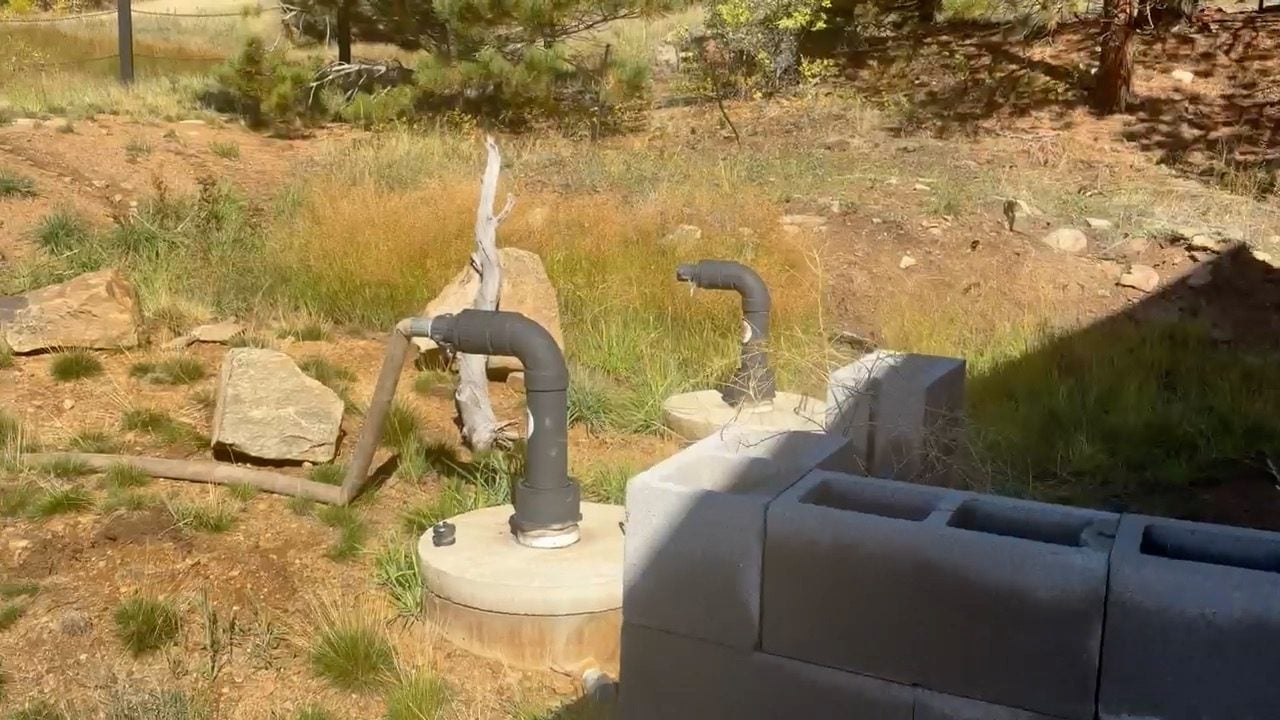
The first time you walk up to a wellhead on a showing, the question is usually the same. “So… how do I know this thing works?”
Fair question. Up here you’re your own water company. Nobody from the city is checking the pipes, testing the water or telling you how much you can use. That sounds scary until you know what to look at. Then it’s just another system you understand.
Here are the five things I check on every well in Gilpin and Clear Creek County before my buyers close. If you’re shopping around Central City, Black Hawk, Idaho Springs or St. Mary’s, this is the list.
1. The permit: what is this well actually allowed to do?
This is the one that surprises people most. In Colorado, the state decides what your well water can be used for, and it’s written on the well permit. Gilpin County says it plainly: private wells are regulated by the state Division of Water Resources (DWR), not the county.
Most mountain homes have what’s called an exempt well. Two kinds you’ll see:
- Household-use-only. Water for inside one single-family home. No lawn, no garden hose, no livestock. This is what most homes on lots under 35 acres have. It can show up even on a 20-acre parcel. Twenty acres does not automatically buy you a garden.
- Domestic (and livestock). Generally available on 35 acres or more. It can serve up to three homes, water up to an acre of lawn and garden, and water animals.
Neither type can be used for a business, and both are capped at 15 gallons per minute. So if you’re picturing horses, a big vegetable garden, a rented guest cabin or a short-term rental, we pull the permit before you fall in love with the view.
The 1972 detail. If the lot is in a subdivision approved after June 1, 1972, the subdivision’s water plan may govern how the well can be used, not just the permit. I read the plat notes too.
2. The fine print: is there an augmentation plan?
Some wells only exist because of a court-approved plan that replaces the water they use. That’s called an augmentation plan, and it usually shows up on newer subdivision lots or on wells that are allowed to do more than a basic permit.
It’s not a bad thing. It’s often what lets you water a small garden. But it comes with rules that transfer to you: usually a water meter, a yearly limit, reporting requirements and sometimes HOA or district fees.
The tell is a water meter on the well, or a permit that references a water court case number. When I see either one, I get the decree and the HOA or district records so you know exactly what you’re signing up for. A valid-looking permit doesn’t prove the plan behind it is being followed.
3. The flow: how much water does it really make?
Gallons per minute (GPM) is how fast water refills the well. It’s only half the story. The other half is storage, meaning the water already standing in the well plus any tank.
Here’s the math I walk buyers through. CSU Extension uses about 75 gallons per person per day as a rule of thumb, and it calls half a gallon per minute the minimum for an acceptable household well.
- 0.5 GPM x 1,440 minutes = about 720 gallons a day
- A family of four uses about 300 gallons a day
On paper, that works. The catch is the morning rush, when showers, laundry and the dishwasher all hit at once. That’s why wells under 1 GPM often have a storage tank. A low-flow well with good storage can be a perfectly happy well.
Don’t trust the old number. The flow listed in the original drilling report could be 30 years old. Mountain wells are drilled into fractured granite, and yield changes over time. I want a current flow test from a licensed well or pump contractor, not a home inspector running a hose. A good test records the water level before pumping, the pumping rate, how far the level drops and how fast it recovers.
If the flow comes back low, it’s usually fixable with a storage tank and booster pump, or sometimes by deepening the well. We get a quote during the inspection period so you’re not guessing.
4. The water itself: is it safe to drink?
Nobody tests a private well unless you order the test. EPA drinking water limits apply to city water systems. On a private well, the owner is responsible, and Colorado doesn’t require testing when a home sells.
Up here, I don’t stop at a basic bacteria test. This is granite country, and the same rock that made Gilpin County a mining district can naturally carry uranium and radon into well water. Results are well by well, so the only way to know is to test.
What I recommend for a purchase:
- Bacteria and nitrates. Gilpin County Public Health offers a $30 test for total coliform, E. coli and nitrate/nitrite. Bottles are picked up at the county office on Highway 119 in Black Hawk. Clear Creek County doesn’t test private wells, so we use a private lab.
- A full lab panel. Uranium, arsenic, radon, metals and the rest, through an accredited lab. There are several in Golden, Evergreen and Denver.
- PFAS. Free through the state’s PFAS testing program.
If something comes back high, it’s almost always a fix. Bacteria often traces back to a loose cap or seal. Uranium and arsenic are commonly handled with a reverse osmosis filter under the kitchen sink. And with real lab numbers in hand, we have something real to negotiate with.
5. The hardware and the paperwork
Your home inspector looks at the house. A licensed pump or well contractor looks at the well. Colorado licenses these contractors, and I always check the license.
A real well inspection looks at the wellhead (the steel casing should stick up at least a foot above ground and be securely capped), the pump and pressure tank, the controls, freeze protection and any treatment equipment. If there’s a second casing or an old dug well nobody can explain, we ask about it.
Then I make sure the contract protects you:
- The well permit number goes in the contract, and you get a copy of the permit before you sign.
- The well inspection, flow test and water tests all have to finish before your inspection deadline. Mountain contractors and labs book up, so we schedule fast.
- Shared well? We need a recorded shared well agreement, reviewed by an attorney.
- After closing, the title company files the ownership change with DWR. I confirm they’re on it.
Red flags I watch for at showings
- A lush lawn, big garden or horses on a small lot
- “Well” in the listing with no permit number
- A big tank in the crawlspace nobody can explain
- Filters, UV lights or treatment systems with no lab reports
- “We only drink bottled water”
- A wellhead in a low spot, flush with the ground, or with a makeshift cap
- A pressure tank that cycles every few seconds
- “Shared well” with no written agreement
None of these are automatic deal-breakers. They’re questions. And the answers are what let you buy with confidence instead of crossed fingers.
The short version
Permit, plan, flow, quality, hardware. Five checks, and every one of them happens before your deadlines, not after you’ve moved in.
Wells are part of the deal up here. They’re also very manageable once you know what you’re looking at. That’s my job.
If you’re eyeing a mountain home with a well, grab 20 minutes on my calendar and I’ll pull the permit for you. Want the bigger picture first? My Colorado Mountain Home Buyer’s Guide covers septic, winter access and my full due-diligence checklist.
Get Mountain Notes
One real lesson a week about buying in the Colorado mountains. Wells, septic, winter roads, the towns. No fluff, and you can unsubscribe anytime.
This post is general information, not legal or water-rights advice. Rules and fees change, so for a specific property we confirm with DWR, the county and, when needed, a water attorney.
Sources: Colorado DWR Well Permitting · DWR Augmentation Plans · CSU Extension Fact Sheet 6.700 · CDPHE Private Well Water · Gilpin County Water Testing · Clear Creek County Water Quality