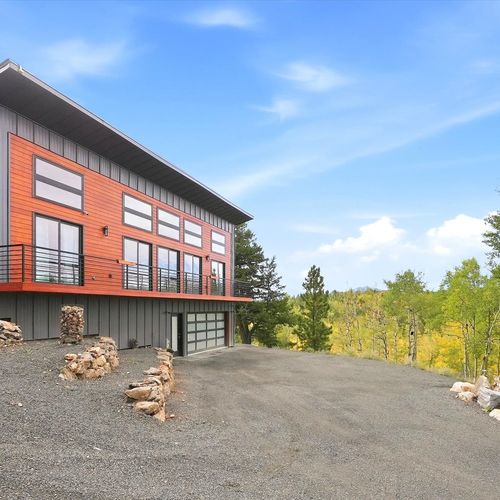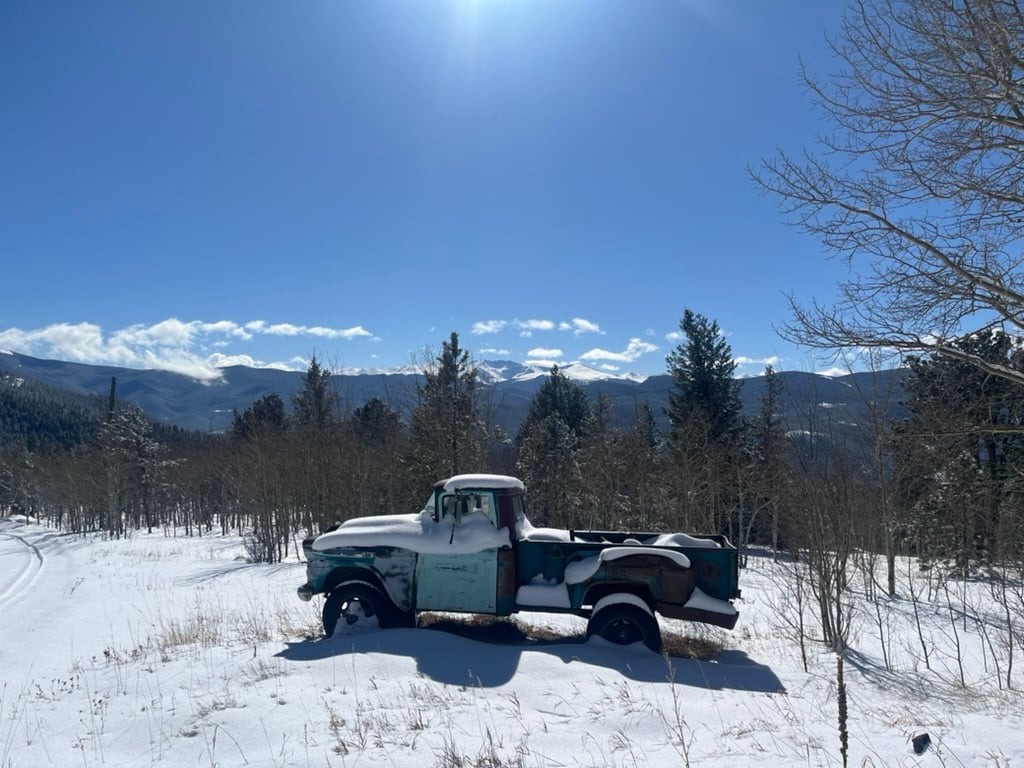
It’s November, and the first question I hear on almost every mountain showing right now is some version of this: “So… who plows this?”
It’s the right question. It’s also only one of three. Before you fall for a cabin above Central City or a building site outside Idaho Springs, you want to know if a fire truck can physically get up the driveway, if you have the legal right to use the road, and who actually takes care of it when it snows.
A road can be drivable, legal and buildable and still be nobody’s job to plow. Here’s how I sort it out with my buyers in Gilpin and Clear Creek County.
Question 1: Who plows the road? “Public” doesn’t mean “plowed”
Both counties plow in priority order, and both have roads they don’t maintain at all.
Gilpin County sorts its roads into four levels:
- Level I: collectors and select high-importance roads. Plowed and sanded first.
- Level II: the rest of the collectors plus local roads on a school bus route. Plowed and sanded within the first 24 hours after the snow stops.
- Level III: local roads, mostly inside subdivisions or serving remote areas. Plowed only for snowfalls over four inches, after Levels I and II are done, normally within 24 to 48 hours after the snow ends.
- Level IV: Forest Service roads, seasonal roads, and roads shown on a recorded plat or dedicated for public use that the county commissioners never formally accepted for maintenance. Emergency maintenance only.
Level IV is the one that catches people. A road can sit right there on a recorded plat, look completely public, and still get no regular plowing. And in blizzard conditions, Gilpin may not plow anything until the wind drops.
Clear Creek County uses three categories. Primary roads carry school bus and mail routes. Secondary residential roads get plowed after those, which the county says may mean second or third day service and not every snowfall. Non-maintained roads get no county snow removal at all. You can look up any road on the county’s Road System List.
What neither county will do
Neither county plows private driveways or private roads except in a life-threatening emergency, and that request goes through the Sheriff’s Office. Neither county tows stuck vehicles.
The snow-pushing rule new owners break all the time
In August 2025 Gilpin adopted Ordinance 25-01, which bans pushing snow or ice from your driveway (or anywhere else) into a county-maintained road. The first violation gets a 24-hour notice to clean it up. After that, the minimum fine is $250 per violation, and each day counts as a separate offense. It applies to owners and to the plow contractors they hire. Clear Creek’s policy also says residents can get a warning or summons for snow pushed into the county right-of-way.
If you hire someone to plow, put this in writing with them.
Private roads: who pays when there’s no agreement?
There’s no Colorado statute I’m aware of that automatically splits private road costs between neighbors. Under Colorado case law, the general rule is that the person using the road across someone else’s land (the easement holder) is responsible for maintaining it, unless an agreement says otherwise. Without a written deal, the plowing and grading run on goodwill. And goodwill tends to run out the day a neighbor sells.
A solid recorded road maintenance agreement spells out who’s bound, each owner’s share, what counts as maintenance (including snow removal), what happens if someone doesn’t pay, and a permanent term that carries to future owners.
Why your lender cares
This is the part that can blindside a closing. For most conventional loans, Fannie Mae wants a property on a privately maintained road to have a legally enforceable, recorded agreement covering cost shares, what happens if someone defaults, and a term that’s usually permanent. FHA, VA and USDA loans generally need a permanent recorded easement but not a separate maintenance agreement.
Either way, I ask about the road agreement in the first week of a contract, not the week before closing, and I get it in front of your lender early.
Question 2: Do you have the legal right to use the road?
Being able to drive to a property and having the legal right to drive to it are two different things up here. In old mining country, plenty of claims and older lots in Gilpin and Clear Creek are reached by roads that people just drove for a century, across land owned by someone else.
Both counties want proof. Gilpin requires you to show legal access to a public road for a new home, and recorded easements may be required where an existing road crosses private land. Clear Creek requires Proof of Legal Access for driveway permits, and an un-platted shared driveway needs an easement signed by every affected owner.
“Everyone has always used that road” is not proof.
Two more things worth knowing:
- Forest Service access comes through a permit, not a deed. The Forest Service’s own private road permit form says it isn’t obligated to issue a new permit to the next buyer, so you may have to reapply.
- Title insurance generally covers a legal right of access, not whether the road is passable or plowable. If your title commitment has an exception for lack of a right of access, that’s a big red flag.
Question 3: Can a fire truck get up the driveway?
This one matters most on land and new builds. Up here the driveway isn’t just gravel. It’s a fire-safety permit, and it can decide whether the county ever signs off on a house.
Under the driveway standards Gilpin adopted with Timberline Fire Protection District, fire access has to reach within 150 feet of the home. Driveways need to be at least 12 feet wide, with a maximum grade of 12 percent unless the fire authority approves steeper in writing. Driveways over 150 feet long need a turnaround. Timberline’s note says a new home whose driveway is too steep has to have an automatic sprinkler system, which is a real cost and design item to price in early.
In Clear Creek, your Driveway/Excavation Permit has to be approved before you can even apply for a building permit.
If the best view needs a driveway that’s too steep, there are often fixes. You just want to know now, not after closing.
Red flags I watch for at showings
- “Seasonal road,” “4WD recommended” or “winter access by snowmobile” in the listing remarks.
- A road on a plat that isn’t on the county maintenance list.
- “The neighbors all chip in” with nothing in writing, or one neighbor with a plow doing everyone a favor.
- “Access via neighbor’s driveway” or “historic access” with no recording number.
- Snow berms pushed across the county road at the end of the driveway.
- A steep, north-facing driveway with listing photos taken only in summer.
Questions to ask before you’re locked in
- Seller: Who plows the road and driveway, and what did it cost last winter? Is there a written road agreement, and is it recorded? Any disputes over who pays? Can you give us recording numbers for every access easement?
- County: What’s the maintenance level of this road, and has the county formally accepted it? Will this access documentation work for a building or driveway permit?
- Title company: Will you insure access without exception? Is a road maintenance agreement recorded?
- Lender: What do you need for a private road on my loan type?
How I handle it with my buyers
None of this is a reason to skip the mountains. It’s just part of the process. Before you’re committed, we confirm the road’s maintenance level, pull the recorded easements, have a surveyor show where the road really sits, and find out who plows the private part and what it costs. If we can’t prove legal access, we can walk away during due diligence.
For more on winter roads, snow and getting in and out, start with the Winter Access section of my Mountain Buyer’s Guide. And if you’re looking at a specific area, my Gilpin County, Central City and Idaho Springs pages break down what living there actually looks like.
Looking at a property on a back road this winter? Book a call with me and I’ll help you figure out who plows it, who owns it and whether a fire truck can make it up the driveway, before you make an offer.
This is general information, not legal advice. Easements, road agreements and access rights depend on the specific property, so talk with a real estate attorney and your title company about yours.
Sources: Gilpin County Snow and Ice Removal Policy; Gilpin County Ordinance 25-01; Clear Creek County “Living Rural” Guide; Clear Creek County Snow Removal Policy; Fannie Mae Selling Guide B4-1.3-04; Gilpin County Building Division; Clear Creek County Grading and Excavation Regulations; Gilpin County Driveway Specifications; Clear Creek County New Single Family Residence Checklist.